Choosing the right baby diaper size can be confusing for new parents. Babies grow quickly, and each stage needs a different fit for comfort and leak protection. If the diaper is too small, it can cause marks and leaks. Too large, and it may not absorb well or stay in place. Understanding diaper sizes by age will help you keep your baby dry and happy.
Baby Diaper Size Calculator
Baby Diaper Sizes Explained
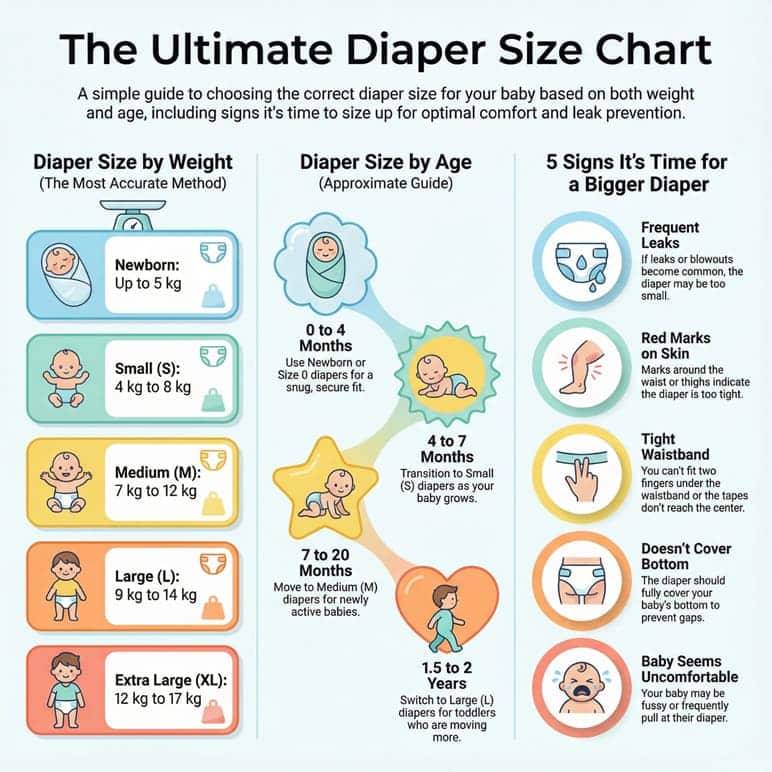
Diaper sizes are mainly based on baby weight, not just age. Age can be a helpful starting point, but babies grow at different speeds. Most diaper brands use numbers like 1, 2, 3, etc. Each number covers a weight range. Some brands also offer newborn or preemie sizes for the smallest babies.
Here is a quick look at common diaper sizes by age and weight:
| Diaper Size | Baby Weight | Typical Age |
|---|---|---|
| Preemie | Up to 6 lbs (2.7 kg) | Premature newborns |
| Newborn (NB) | Up to 10 lbs (4.5 kg) | 0-1 month |
| Size 1 | 8-14 lbs (3.6-6.4 kg) | 0-3 months |
| Size 2 | 12-18 lbs (5.4-8.2 kg) | 2-6 months |
| Size 3 | 16-28 lbs (7.3-12.7 kg) | 5-24 months |
| Size 4 | 22-37 lbs (10-17 kg) | 18-36 months |
| Size 5 | 27+ lbs (12+ kg) | 2.5+ years |
| Size 6 | 35+ lbs (16+ kg) | 3+ years |
How To Choose The Right Size
Use your baby’s current weight for the best fit. If your baby is between sizes, go up to the next size. Diaper fit can change quickly, so check often for signs your baby needs a bigger size.
Signs your baby needs a larger diaper:
- Red marks on legs or waist
- Leaks or blowouts
- Trouble closing the diaper tabs

Credit: nilds.gov.ng
Age And Diaper Size: What To Expect
Every baby is unique, but here are some typical milestones:
| Age | Most Common Size |
|---|---|
| 0-1 month | Newborn |
| 1-3 months | Size 1 |
| 3-6 months | Size 2 |
| 6-12 months | Size 3 |
| 1-2 years | Size 4 |
| 2-3 years | Size 5 |
| 3+ years | Size 6 |
Common Mistakes When Choosing Diaper Size
Many parents choose diapers based on age alone, but this can lead to leaks or discomfort. Always check weight first. Another mistake is staying with a size too long, which causes red marks or leaks. If you see these signs, switch to the next size.
Some brands fit differently. For example, a Size 3 in one brand may be smaller or bigger than another. Try a small pack first before buying in bulk.
Credit: cinemaximiliaan.org
Helpful Tips For Parents
- Keep a few different sizes at home during fast growth periods.
- Check diaper fit every few weeks.
- Remember, overnight diapers or pull-ups may fit differently than daytime diapers.
Frequently Asked Questions
What If My Baby Is Between Diaper Sizes?
If your baby is close to the top weight for a size, it’s best to go up to the next size for comfort and fewer leaks.
How Do I Know If The Diaper Fits Well?
A good fit means the diaper sits snug but not tight around the waist and legs, and you can fit two fingers under the waistband.
How Many Diapers Will My Baby Need In Each Size?
Newborns use 8-12 diapers per day. Babies will use fewer as they grow. Most babies stay in Size 1 or 2 for a few months, then sizes last longer.
Can I Use The Same Size For Day And Night?
Yes, but some overnight diapers are more absorbent. If your baby leaks at night, try a larger size or special overnight diaper.
Are All Diaper Brands Sized The Same?
No, sizing can differ. Always check the brand’s weight guidelines and try a small pack first. For more details, you can visit the Diaper Wikipedia page.
Picking the right baby diaper size by age helps your baby stay comfortable and prevents messes. Follow your baby’s weight, check the fit often, and don’t be afraid to size up as they grow. This small step can make a big difference for you and your baby’s day-to-day happiness.