Organizing a baby changing table can make diaper changes smoother, faster, and less stressful. When everything is in the right place, you can focus more on your baby and less on searching for supplies. Many new parents overlook small details that can have a big impact on daily routines.
Setting up your changing table well saves time and keeps your baby safer. This guide will show you how to organize a baby changing table so it works best for you, your baby, and your space.
Choosing The Right Changing Table
Before organizing, you need the right table. Look for a sturdy design and a comfortable height. Standard changing tables are 36–42 inches tall, which helps prevent back pain. Some come with built-in drawers, while others have open shelves. If you live in a small apartment, a compact model with wheels may fit better.
| Type | Features | Ideal For |
|---|---|---|
| Standard Table | Drawers, shelves | Spacious rooms |
| Combo Dresser | Extra storage | Small spaces |
| Portable Table | Wheels, foldable | Travel, limited space |
A table with safety straps is important to prevent falls. Always check weight limits, usually between 30–50 pounds.
Essential Items To Keep On Your Changing Table
A well-organized changing table starts with the right supplies. Here’s what you should have within arm’s reach:
- Diapers: Keep at least 10–15 clean diapers ready. If you use cloth diapers, have extra inserts nearby.
- Wipes: Choose unscented, baby-safe wipes. A refillable wipe box is handy.
- Diaper Cream: Protect your baby’s skin from rashes with a gentle cream.
- Changing Pads: Soft, waterproof pads keep the surface clean.
- Disposable Bags: For dirty diapers, a roll of bags helps control odors.
- Extra Clothes: Accidents happen. Keep 2–3 sets of clean outfits close.
- Hand Sanitizer: Clean your hands before and after each change.
- Burp Cloths: Useful for unexpected messes.
- Thermometer: Some parents like to keep a digital thermometer handy.
Many parents forget to stock enough extra outfits, which can lead to stress during diaper emergencies. Keep these items organized for faster changes.
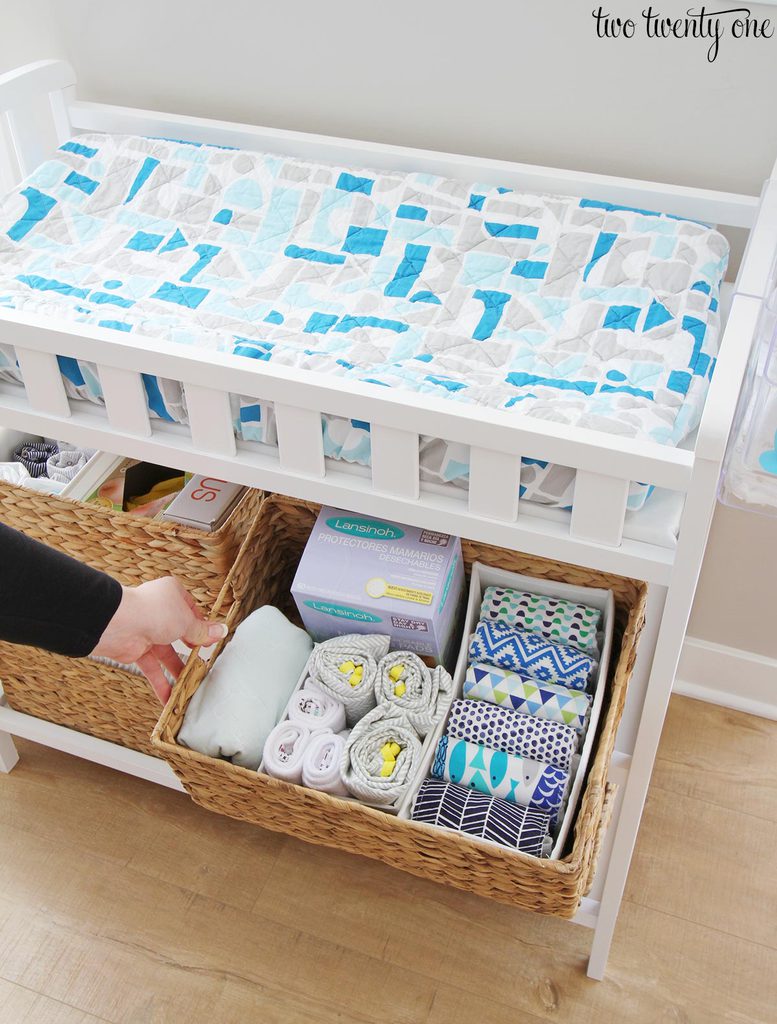
Credit: www.twotwentyone.net
Organizing Supplies For Efficiency
Now it’s time to arrange your supplies. Place the most-used items at the top or front. Diapers and wipes should always be the easiest to grab.
Using Baskets And Containers
Small baskets or bins help keep things tidy. Use one for diapers, one for wipes, and another for creams. Clear containers let you see what’s inside without searching.
| Container Type | Best For | Pros |
|---|---|---|
| Wire Basket | Diapers, wipes | Easy to clean, visible |
| Plastic Bin | Creams, small items | Waterproof, stackable |
| Fabric Box | Clothes, burp cloths | Soft, flexible |
Arranging For Safety
Keep dangerous items, like scissors or sharp objects, out of reach. Always place heavier containers on lower shelves. Never leave your baby unattended, even for a second.
Maximizing Small Spaces
If your changing table is small, vertical storage can help. Use wall shelves above the table to hold extra supplies. Hooks can hold bags or towels. Drawer dividers are helpful for separating clothes and wipes.
Example Setup For Small Spaces
- Top shelf: Diapers and wipes
- Middle shelf: Creams, hand sanitizer
- Bottom shelf: Extra clothes and burp cloths
A magnetic strip can hold nail clippers or thermometers safely. Many people overlook vertical space, which can double your storage in a tiny nursery.
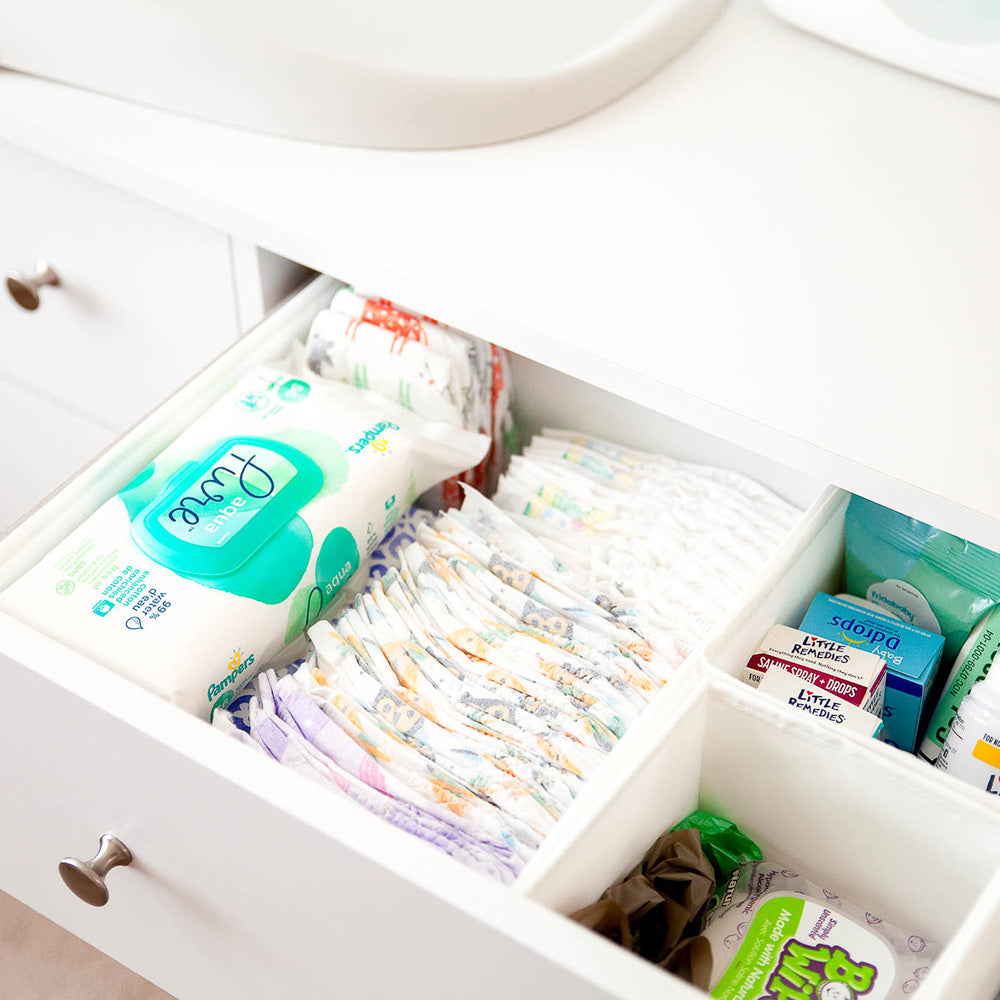
Credit: myfirstnursery.co.uk
Cleaning And Restocking Routine
A clean changing table is important for your baby’s health. Wipe down the surface with a safe disinfectant every day. Change the pad cover at least once a week, or after accidents.
Set a restocking schedule—check supplies every evening. This avoids running out of diapers or wipes at the worst time. Keep a backup stash in another room for emergencies.
| Task | Frequency | Tips |
|---|---|---|
| Wipe surface | Daily | Use baby-safe cleaners |
| Change pad cover | Weekly | Have 2–3 covers |
| Restock supplies | Daily | Check before bedtime |
Neglecting regular cleaning can lead to germs and skin issues. Make this routine part of your daily schedule.
Tips For Making Diaper Changes Easier
Here are some ideas to make diaper changes less stressful:
- Prepare ahead: Refill supplies before you need them.
- Keep distractions handy: Toys or a mobile help keep your baby calm.
- Use a nightlight: A soft light helps with late-night changes.
- Label baskets: If others help with changes, labels make it easier.
- Have a backup: Store extra supplies nearby, not just on the table.
Many parents forget to keep distraction toys nearby. Babies wiggle less when they have something to focus on.
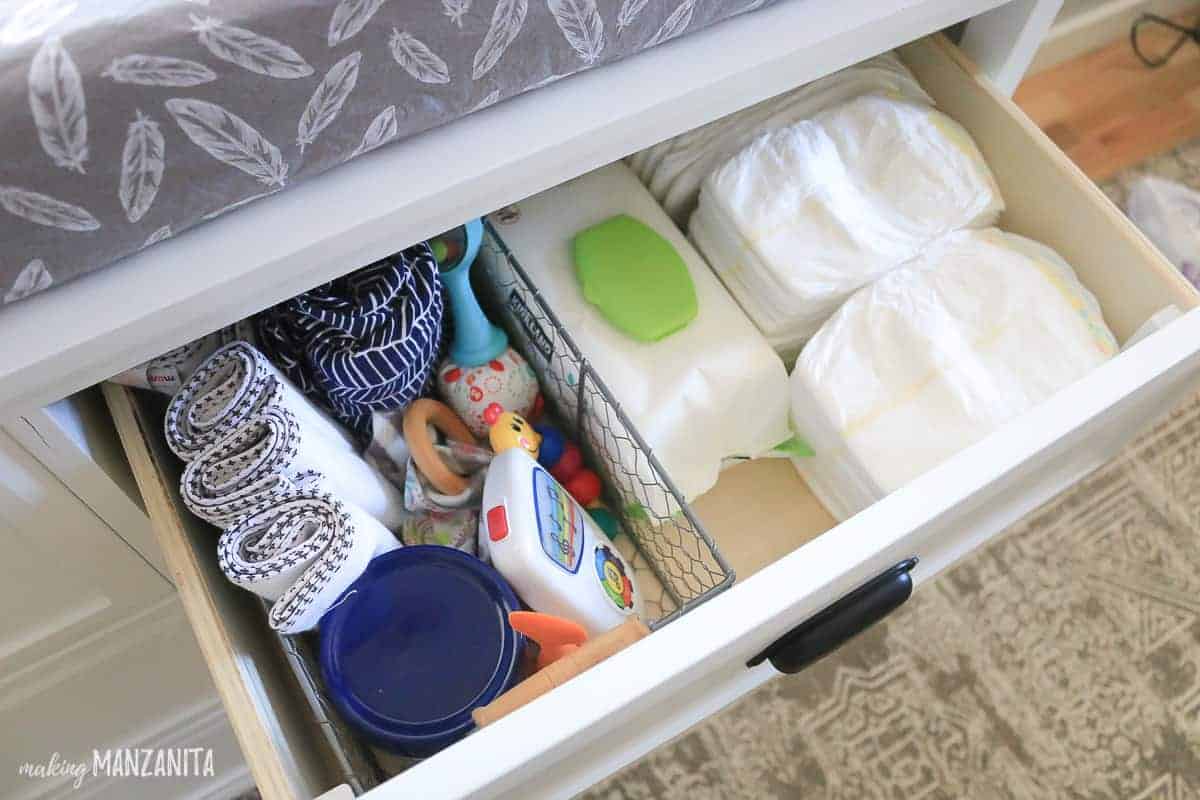
Credit: www.makingmanzanita.com
Personalizing Your Changing Table
Add a personal touch to your changing area. Hang a family photo or a fun print above the table. Choose a colorful pad cover to brighten the space. Some parents add a small plant for freshness. Avoid heavy decorations that could fall.
Frequently Asked Questions
How Many Diapers Should I Keep On The Changing Table?
Keep at least 10–15 diapers ready. This covers a full day’s use and prevents last-minute shortages.
Is It Safe To Store Creams And Medicines On The Table?
Store creams within reach but keep medicines locked away or out of reach. Only keep items you use often on the table.
How Do I Organize Supplies For Twins?
Use separate baskets for each baby’s supplies. Color-code containers for quick identification.
What’s The Best Way To Clean The Changing Table?
Wipe the surface daily with a baby-safe disinfectant. Wash pad covers weekly and clean baskets monthly.
Where Can I Find More Tips For Organizing A Nursery?
For more advice, check What to Expect, a trusted parenting resource.
Setting up your baby changing table well makes every diaper change easier. When you keep supplies organized, clean, and safe, you spend less time searching and more time caring for your baby. With the right setup, diaper changes can become quick and comfortable for both you and your little one.